

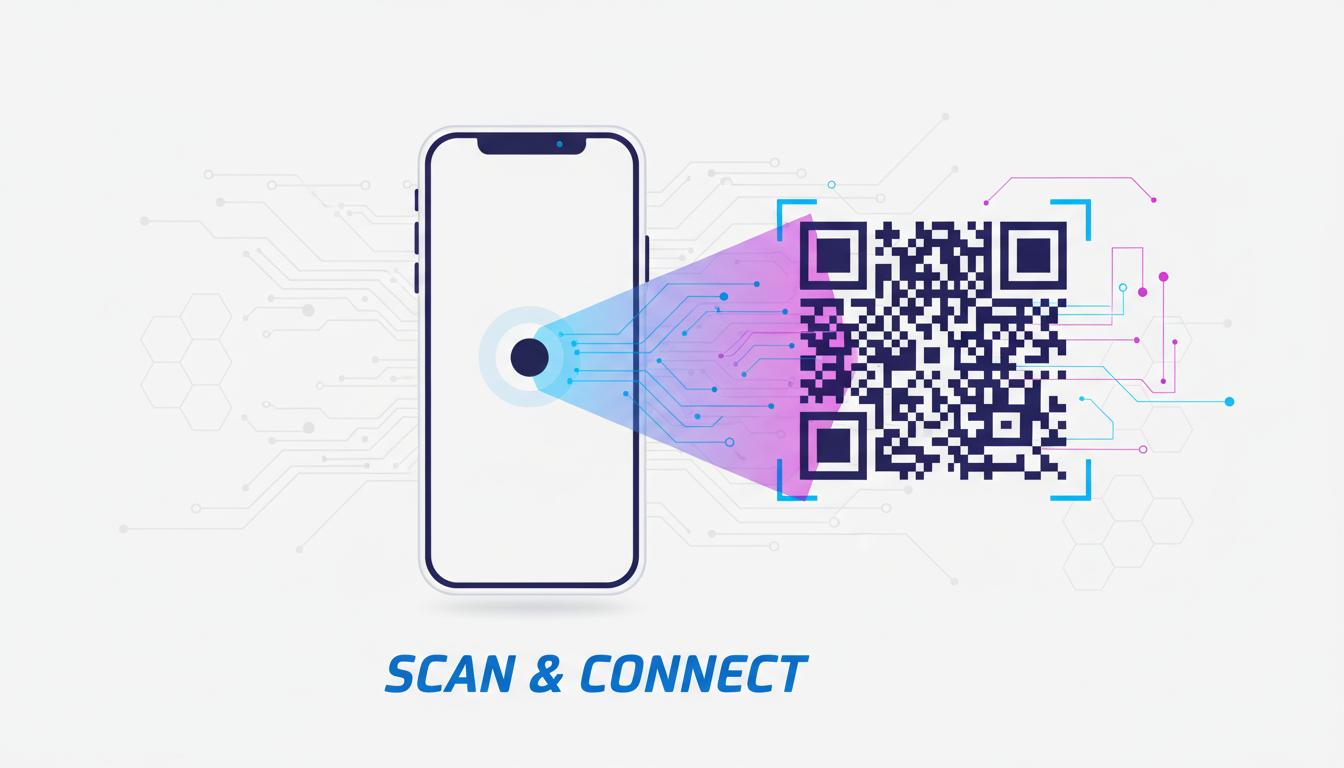
QR codes have evolved from a niche technology to a mainstream marketing tool. With native QR scanning now built into iOS and Android cameras, the friction that once limited QR code adoption has disappeared. Smart businesses are leveraging this shift to bridge the gap between physical and digital experiences�and they're seeing measurable improvements in conversion rates as a result.
The QR Code Renaissance
QR codes were invented in 1994 by Denso Wave, a Japanese automotive company, to track vehicle parts during manufacturing. For years, they remained primarily an industrial tool, unfamiliar to most consumers. The few marketing applications that did exist required users to download dedicated QR scanner apps�a significant barrier to adoption.
Everything changed when Apple and Google integrated QR scanning directly into their camera apps. iOS 11 (2017) added native QR support, and Android followed shortly after. Suddenly, scanning a QR code became as simple as pointing your camera at it�no additional apps required.
The COVID-19 pandemic accelerated adoption further. Contactless interactions became essential, and QR codes provided a touch-free way to access menus, make payments, and share information. According to a 2021 survey by MobileIron, 83% of respondents had scanned a QR code at least once, and 72% reported scanning a code within the past month.
Why QR Codes Drive Conversions
1. Reducing Friction in the Customer Journey
Every step between a customer's initial interest and completing a conversion represents an opportunity for drop-off. QR codes eliminate several of these steps:
Traditional path: See advertisement ? Remember URL ? Open browser ? Type URL ? Navigate site ? Find offer ? Convert
QR code path: See QR code ? Scan ? Convert
This reduction in friction can dramatically improve conversion rates, especially for time-sensitive offers or impulse purchases.
2. Bridging Offline and Online Experiences
QR codes solve one of marketing's oldest challenges: measuring the impact of offline advertising. By placing unique QR codes on print ads, billboards, product packaging, and in-store displays, businesses can track exactly how these offline touchpoints drive online engagement.
A restaurant might discover that 40% of their online reservations come from the QR code on their physical menu. A retailer might learn that product packaging QR codes generate more conversions than their email campaigns. These insights enable better budget allocation and campaign optimization.
3. Enabling Contextual Experiences
QR codes allow you to deliver the right content at the right moment. A customer scanning a QR code on a product has different needs than someone clicking a Facebook ad. You can tailor the landing page experience to match this context:
- Product packaging: Link to usage instructions, recipe ideas, or loyalty program signup
- In-store displays: Link to product comparisons, customer reviews, or exclusive discounts
- Event materials: Link to session schedules, speaker bios, or networking platforms
- Business cards: Link to LinkedIn profiles, portfolio sites, or calendar booking
QR Code Conversion Statistics
The data supports QR codes' effectiveness as a conversion tool:
- QR code usage grew 238% between 2021 and 2022 (Bitly)
- 59% of respondents believe QR codes will be a permanent part of their mobile device usage (MobileIron)
- Dynamic QR codes let you edit the destination after printing without reprinting the code — a separate feature from the static codes our generator produces, worth knowing about if you're printing something long-lived like packaging or signage
Strategies to Maximize QR Code Conversions
1. Provide Clear Value Propositions
Users need a compelling reason to scan your QR code. Don't just place a code and hope�tell people what they'll get:
Weak: "Scan for more information"
Strong: "Scan to get 20% off your first order"
Other effective value propositions include:
- "Scan to skip the line"
- "Scan for exclusive content"
- "Scan to enter the giveaway"
- "Scan to download the app"
2. Optimize Landing Pages for Mobile
Since QR codes are scanned with smartphones, your landing pages must be mobile-optimized. This means:
- Fast loading times (under 3 seconds)
- Responsive design that works on all screen sizes
- Large, thumb-friendly buttons
- Simplified forms with minimal fields
- Clear calls-to-action above the fold
A poor mobile experience will negate all the friction reduction benefits of using a QR code.
3. Use Dynamic QR Codes
Dynamic QR codes allow you to change the destination URL without reprinting the code itself. This provides several advantages:
- Update campaigns without reprinting materials
- A/B test different landing pages
- Fix broken links instantly
- Track scan analytics (location, device, time)
- Schedule URL changes for time-sensitive campaigns
While dynamic QR codes often require a paid service, the flexibility and analytics they provide typically justify the cost.
4. Strategic Placement
Where you place your QR code affects scan rates significantly:
High-performing placements:
- Product packaging (customers already engaged)
- Receipts and invoices (post-purchase engagement)
- Event badges and lanyards (captive audience)
- Restaurant tables (downtime for scanning)
- Packaging inserts (unboxing experience)
Low-performing placements:
- Moving vehicles (safety concerns, difficult to scan)
- Billboards viewed from highways (too far, too fast)
- TV commercials (not enough time, no phone in hand)
- Email signatures (users already online)
5. Design for Scannability
A QR code that doesn't scan is worthless. Follow these design guidelines:
- Minimum size: 2 x 2 cm (0.8 x 0.8 inches) for print
- Sufficient contrast between code and background
- Quiet zone (white space) around the code
- Avoid placing over images or patterns
- Test on multiple devices before printing
Consider adding your logo to the center of the QR code for branding, but ensure it doesn't interfere with scannability.
6. Track and Analyze Performance
Use UTM parameters with your QR code URLs to track performance in Google Analytics:
https://example.com/offer?utm_source=qr_code&utm_medium=print&utm_campaign=summer_sale&utm_content=product_packaging
Monitor metrics like:
- Scan-to-visit conversion rate
- Time on site from QR traffic
- Conversion rate compared to other channels
- Peak scanning times and locations
Industry-Specific QR Code Applications
Retail
Retailers use QR codes to:
- Enable contactless payments
- Provide product information and reviews
- Offer digital coupons and loyalty rewards
- Facilitate easy reordering
- Connect online and in-store inventories
Restaurants and Hospitality
The food service industry leverages QR codes for:
- Digital menus (reducing printing costs and enabling real-time updates)
- Contactless ordering and payment
- Loyalty program enrollment
- Feedback collection
- Reservation systems
Real Estate
Real estate professionals use QR codes to:
- Provide instant property details from for-sale signs
- Schedule showings
- Share virtual tours
- Collect lead information
- Connect print advertising to online listings
Healthcare
Healthcare providers implement QR codes for:
- Appointment scheduling
- Patient check-in (reducing waiting room contact)
- Prescription information
- Health education materials
- Vaccination records
Common QR Code Mistakes to Avoid
Linking to Non-Mobile-Optimized Pages
Nothing kills conversion faster than a QR code that leads to a desktop-only website. Always test your landing pages on multiple mobile devices.
Using Low-Quality Prints
QR codes need to be sharp and clear to scan properly. Low-resolution printing, especially on flexible materials like fabric or curved surfaces, can render codes unscannable.
Forgetting the Call-to-Action
A QR code without context rarely gets scanned. Always accompany your code with a clear explanation of what users will receive.
Not Testing Before Launch
Test your QR codes with multiple devices and apps before deploying them. What scans perfectly on an iPhone might fail on certain Android devices.
The Future of QR Codes
QR code technology continues to evolve. Emerging trends include:
- QR codes with logos: Better branding without sacrificing scannability
- Animated QR codes: For digital displays and video
- Enhanced security: Encrypted QR codes for sensitive applications
- Integration with AR: QR codes triggering augmented reality experiences
- Payment integration: Seamless mobile payments via QR
Conclusion
QR codes have transitioned from a technology ahead of its time to an essential marketing tool. Their ability to bridge offline and online experiences, reduce customer journey friction, and provide measurable results makes them invaluable for modern marketers.
The key to QR code success lies in strategic implementation: provide clear value, optimize for mobile, track performance, and continuously refine based on data. When executed properly, QR codes can significantly increase conversion rates and provide insights that improve your entire marketing strategy.
Ready to create your QR code?
Use our free QR code generator to create high-quality, scannable codes for your marketing campaigns.
Generate QR CodeFrequently Asked Questions
What is a good conversion rate for a QR code campaign?
A 'good' QR code conversion rate depends on the context, but industry benchmarks suggest that 2–5% of people who see a QR code will scan it in a typical marketing environment such as a poster or product packaging. Of those who land on the destination page, conversion rates follow standard landing page norms — anywhere from 1–10% depending on the offer and page quality. In high-intent contexts like a restaurant menu QR or a post-purchase packaging insert, scan rates can reach 15–25% because the user's motivation is immediate and clear. Always measure scan-to-landing-page rate and landing-page-to-conversion rate separately to identify where the drop-off occurs.
Why do some QR codes have high scan rates but very low conversions?
High scan rate with low conversion almost always points to a destination problem, not a QR code problem. The most common causes are: (1) the page is not mobile-optimised and loads slowly or displays poorly on a phone, (2) the landing page content does not match the expectation set by the QR code's surrounding copy, (3) there is no clear call-to-action above the fold, or (4) the page asks for too much information before offering value. To diagnose the issue, check your analytics for bounce rate and time-on-page from QR traffic specifically. If bounce rate exceeds 70% and average session is under 10 seconds, the page experience is the problem.
How can I track QR code conversions in Google Analytics?
The most reliable method is to embed UTM parameters in the destination URL before generating the QR code. Use utm_source=qr-code, utm_medium=print (or offline), and utm_campaign=your-campaign-name. When users scan the code, GA4 attributes their session to those parameters, and you can track goal completions (purchases, form submissions, sign-ups) filtered to that traffic source. For more granular tracking, create a dedicated landing page per QR code placement so you can measure performance by location — for example, one page for the window poster and a different one for the in-store shelf card.